Caregiver Resources

Practical, compassionate ideas to help you stay connected when dementia or aphasia changes communication.
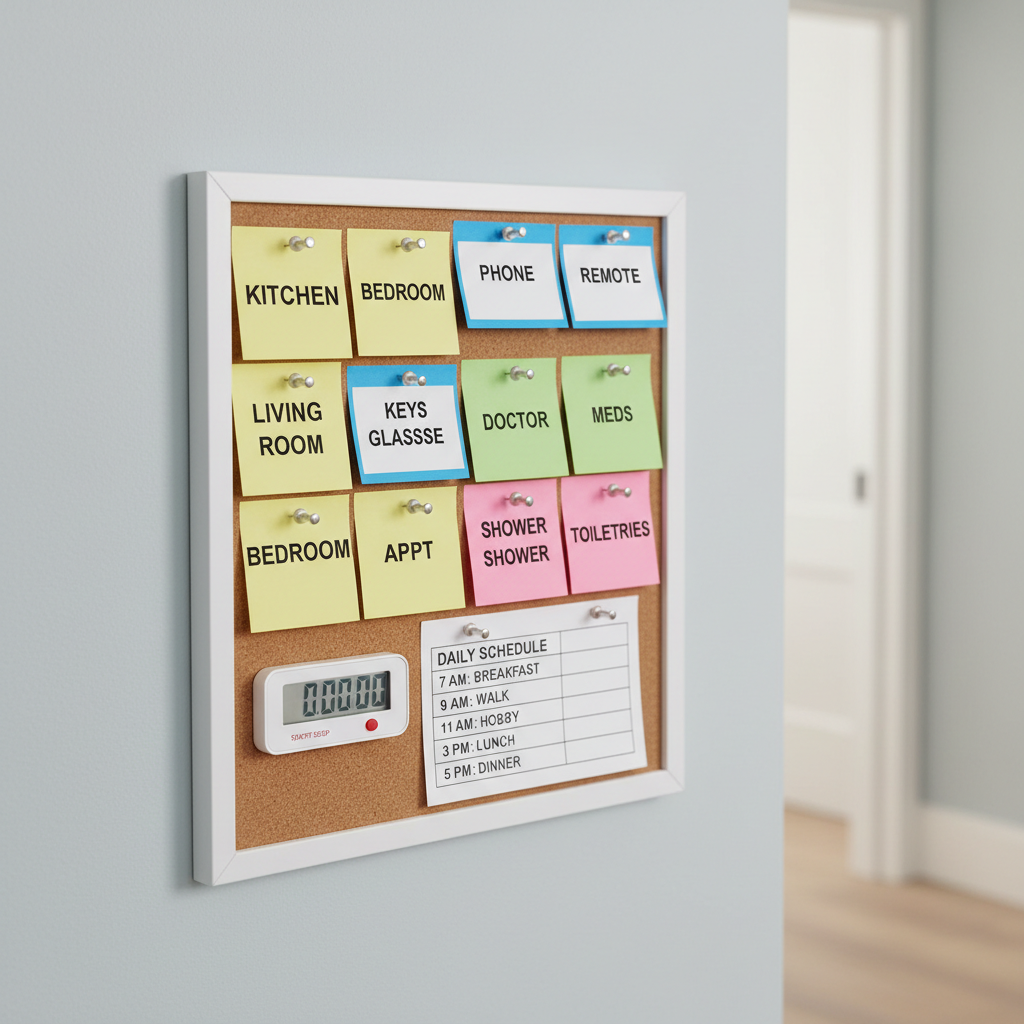

A small cork bulletin board mounted on a pale blue wall, meticulously arranged with color-coded sticky notes and index cards bearing single, clearly printed words like “kitchen,” “bathroom,” and “phone,” each secured with simple metal pins. A slim digital timer and a neatly printed daily schedule are pinned alongside, creating an organized care-planning hub. Diffused daylight from the side casts soft, even illumination, minimizing harsh shadows and emphasizing clarity and order. Shot in photographic realism at a slight angle, with the edges of a tidy hallway just visible in soft focus, the mood is calm, supportive, and gently structured, echoing the practical tools caregivers use to navigate dementia-related language changes.
A well-worn hardcover journal with a soft grey fabric cover lies open on a light wooden table, its pages filled with gentle, looping handwriting that fades toward the edges, as if words are slowly slipping away. Beside it rests a simple black fountain pen and a neatly folded pair of reading glasses. Soft morning light from an unseen window washes across the scene, creating calm, elongated shadows and highlighting the paper’s slight texture. In the blurred background, a tidy bookshelf and a small potted plant suggest a quiet home study. Photographic realism, eye-level composition with shallow depth of field, conveying a thoughtful, reflective mood suitable for a professional caregiving blog.

Topics

Explore caregiving guides on communication, daily routines, safety, emotional support, and self-care, created for families walking alongside loved ones with dementia or aphasia, so you never feel alone in the small, everyday decisions.

Share Needs

Tell us which topics, worries, or daily challenges matter most, so future posts support you.

← Back

Thank you for your response. ✨